News
SADC MCSCC’s Operational Task Force agree on new actions to consolidate regional MCS cooperation
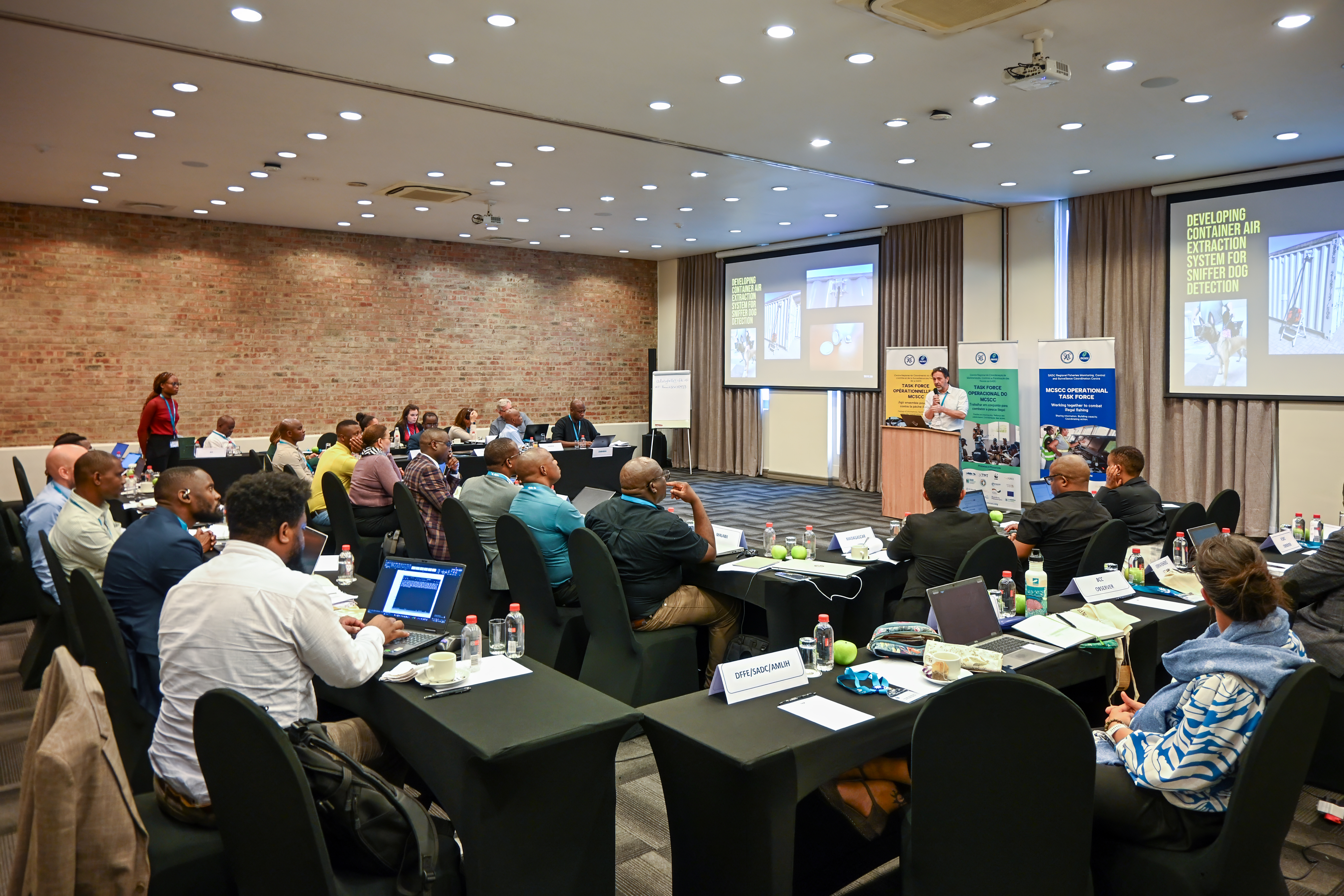
On 9–11 November 2026, State Parties to the Charter Establishing the Southern African Development Community (SADC) Regional Monitoring, Control and Surveillance Coordination Centre (MCSCC) met for the fifth Operational Task Force (OTF) meeting in Cape Town, South Africa, supported by the SADC MCSCC Secretariat. The meeting gathered 35 delegates from non-SADC partner states, technical partners and observers to the MCSCC to continue operationalising regional commitments and making the next steps in implementing key SADC Ministers’ decisions on combatting IUU fishing.
The fifth OTF meeting reported on progress made on the operationalisation of the SADC MCSCC and made several recommendations in key areas:
- Strengthening regional cooperation and information sharing between State parties through the MCSCC information portal, Basecamp
- Building State Parties’ MCS capacity
- Strengthening the OTF’s institutional role as a permanent mechanism of the MCSCC
- Making recommendations on strengthening the participation of landlocked countries in regional cooperation
- Continuing implementation the roadmap for establishment of the Regional Register of Fishing Vessels (RRFV), with rollout of national pilots
- Operationalising the 2026 SADC ministerial decision to address the threat of monofilament nets
- Promoting the adoption of international processes
- Understanding the implications of unregulated fishing for African fisheries
The fifth OTF meeting highlighted the commitment of SADC Member States to tackle IUU fishing through stronger regional cooperation and information sharing mechanisms in a manner inclusive of all Member States, including the landlocked countries.
In the light of this meeting, it was recommended to strengthen regional cooperation, information sharing through Basecamp and MCS capabilities as well as cementing the OTF’s institutional role within the SADC MCSCC and increasing landlocked countries’ participation. States also called for further advancing of the RRFV, addressing monofilament nets, adopting international processes and better understanding the implications of unregulated fishing in African Fisheries.
“We have a duty to protect our marine resources for the benefits our future generations” said Tlangelani Happy Mitileni, Control Marine Conservation Inspector for the South-West Coast Region, representing South Africa as Chair of OTF5. “The OTF is making all efforts to ensure our marine resources are looked after”.
Stop Illegal Fishing supports the MCSCC through various projects including Oceans Vigilance, SADC Atlantic States and is a member of the technical team.